WordPress Article
Pricing Page Design Patterns That Improve Conversions
A practical guide to pricing page design patterns that improve conversions, including UX, accessibility, speed, conversion, and modern website design decisions for better results.
Unlock Your Potential
Discover effective pricing page design patterns that can enhance conversions on your WordPress site.
Understanding the Importance of Pricing Pages
Your pricing page is often the last step before a customer makes a decision. It’s not just about listing prices; it’s about communicating value, building trust, and guiding users toward a purchase. A well-designed pricing page can significantly improve your conversion rates, especially for small businesses and service providers. A clear and engaging pricing page can also reduce bounce rates, keeping potential customers engaged longer.
Moreover, a well-crafted pricing page can serve as a powerful marketing tool. It can help clarify your offerings, making it easier for customers to understand what they’re paying for and why it’s worth it. This understanding can lead to increased customer satisfaction and loyalty, as users feel more informed and confident in their purchasing decisions.
Key Elements of a High-Converting Pricing Page
When crafting your pricing page, focus on these essential elements:
- Clear pricing options
- Value propositions
- Credibility indicators
- Simple, intuitive layout
- Mobile responsiveness
- High-quality visuals
1. Clear Pricing Options
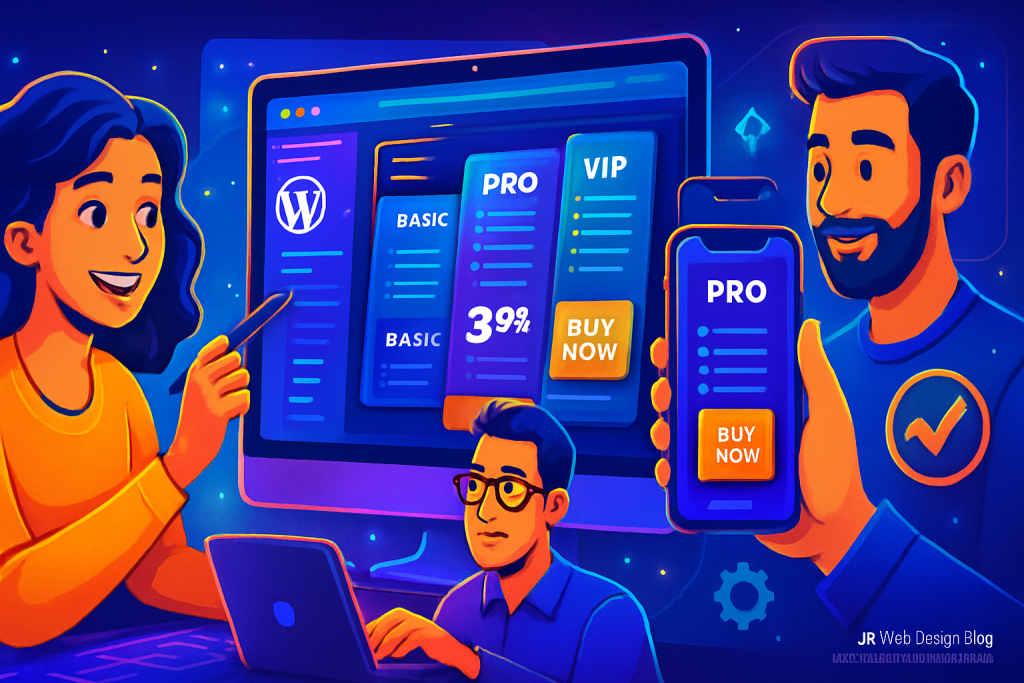
Make sure your pricing options are displayed clearly. Avoid clutter and confusion. Use tables or boxes to separate each plan. For example, you might have a basic, standard, and premium plan. This way, customers can easily compare what each plan offers. Consider using colour coding or icons to further differentiate plans, making it visually appealing and easy to digest.
Additionally, consider including a comparison chart that highlights the differences between each plan. This approach not only aids in decision-making but also emphasizes the value of higher-tier plans, potentially increasing upsells.
2. Value Propositions
Highlight the benefits of each plan. It’s not just about what the customer gets but how it solves their problems. Use bullet points or short paragraphs to describe key features, ensuring they are straightforward and compelling. Emphasise unique selling points that set your offerings apart from competitors, which can enhance perceived value.
Consider using customer-centric language that speaks directly to your audience’s needs. For instance, instead of saying “Includes 24/7 support,” you could say, “Get peace of mind with 24/7 support whenever you need it.” This subtle shift in wording can significantly impact how your audience perceives the value of your offerings.
3. Credibility Indicators
Trust is crucial for conversions. Incorporate elements like customer testimonials, logos of recognised brands you’ve worked with, or any awards and certifications you have received. These help in building credibility and reassure potential customers that they are making a wise choice. Additionally, consider including user reviews or ratings to offer social proof, which can further validate your claims.
Another effective strategy is to include case studies that illustrate how your service or product has positively impacted previous customers. This not only builds trust but also allows potential customers to envision their success with your offerings.
4. Simple, Intuitive Layout
A cluttered page can overwhelm potential customers. Keep your layout clean and intuitive. Use whitespace effectively to guide the user’s eye. An effective layout enhances readability and makes it easier for the user to make decisions. You might also consider using contrasting colours for call-to-action buttons to draw attention and improve click-through rates.
Furthermore, ensure that your pricing page flows logically. Start with the most popular option, followed by alternatives, leading to a clear call-to-action. This strategic layout can guide users through their decision-making process smoothly.
5. Mobile Responsiveness
With more users browsing from mobile devices, ensure your pricing page is mobile-friendly. This means responsive design that adapts well to different screen sizes, ensuring all text is legible, buttons are easily clickable, and overall navigation is smooth. Test your pricing page on various devices to ensure a seamless experience, as a poor mobile experience can lead to lost sales.
In addition, consider implementing touch-friendly elements. Larger buttons and simplified navigation can significantly enhance the user experience on mobile devices, making it easier for customers to take action.
Modern WordPress Design Angle
Modern WordPress themes offer flexibility and design options that can enhance your pricing page. Look for themes that allow customisation without needing to dive deep into coding. Plugins like Elementor or WPBakery can be particularly useful, providing drag-and-drop functionality to create visually appealing layouts quickly. Additionally, consider themes that are designed with SEO best practices in mind, as this will help your page rank better in search results.
Opt for themes that are optimised for speed and SEO. Fast-loading pages not only improve user experience but also help with search engine rankings. Additionally, select themes that are regularly updated, ensuring compatibility with the latest WordPress features and security standards. A modern design can reflect your brand’s professionalism, which is essential for building customer trust.
Furthermore, explore theme marketplaces that offer pre-designed pricing page templates. These can save you time and effort, allowing you to focus on customising content rather than starting from scratch. Many of these templates come with built-in best practices, ensuring your pricing page is optimised for conversions right from the start.
Using Visuals Effectively
Visual elements can make your pricing page more engaging. Use icons, illustrations, or images that complement your text. However, avoid overloading your page with visuals that might distract from your main message. A clean design balances visuals with important information. You might also consider using infographics or charts to present complex information in an easily digestible format.
Incorporating videos can also be an effective way to engage users. A short explainer video about your services can clarify any confusion regarding your offerings and keep users on your site longer, which can positively impact your search engine rankings.
A/B Testing for Continuous Improvement
Once your pricing page is live, it’s essential to test different layouts and content. A/B testing allows you to see what resonates best with your audience. Experiment with different headlines, button colours, or even the order of your pricing options. This iterative process can lead to significant improvements in conversion rates. Make sure to track your metrics closely to understand which changes yield the best results.
Additionally, consider testing different pricing strategies, such as introducing a limited-time discount or a money-back guarantee. These tactics can create urgency and encourage users to make a decision more quickly.
The Importance of Speed
Page load speed is critical for user experience. A slow-loading pricing page can deter potential customers. Use tools like Google PageSpeed Insights to analyse your site’s performance and make necessary improvements. Optimising images, minimising scripts, and leveraging browser caching can greatly enhance speed. Additionally, consider using a Content Delivery Network (CDN) to improve load times across different geographical locations.
Regularly monitor your site’s performance, especially after making changes to your pricing page. This proactive approach will help you identify any potential issues before they affect your conversion rates.
Conclusion: Crafting Your Pricing Page with Purpose
Crafting a high-converting pricing page is about more than just listing prices. It’s about creating an intuitive, trust-inspiring experience for your users. By focusing on clear communication, effective layout, and modern design practices, you can significantly improve your conversion rates. Each element on your pricing page should work in harmony to guide users toward making a purchase.
Remember, your pricing page is a reflection of your brand. Invest the time to make it shine, and the results will follow. Regularly revisiting and updating your pricing page in response to user feedback and market changes will keep it relevant and effective. By continually refining your approach, you can ensure that your pricing page remains a powerful tool for driving conversions and growing your business.