WordPress Article
Advanced Lazy Loading Strategies Without Harming SEO
Learn advanced lazy loading strategies without harming SEO with practical advice on implementation, performance, security, SEO, and scalable website workflows for better results.
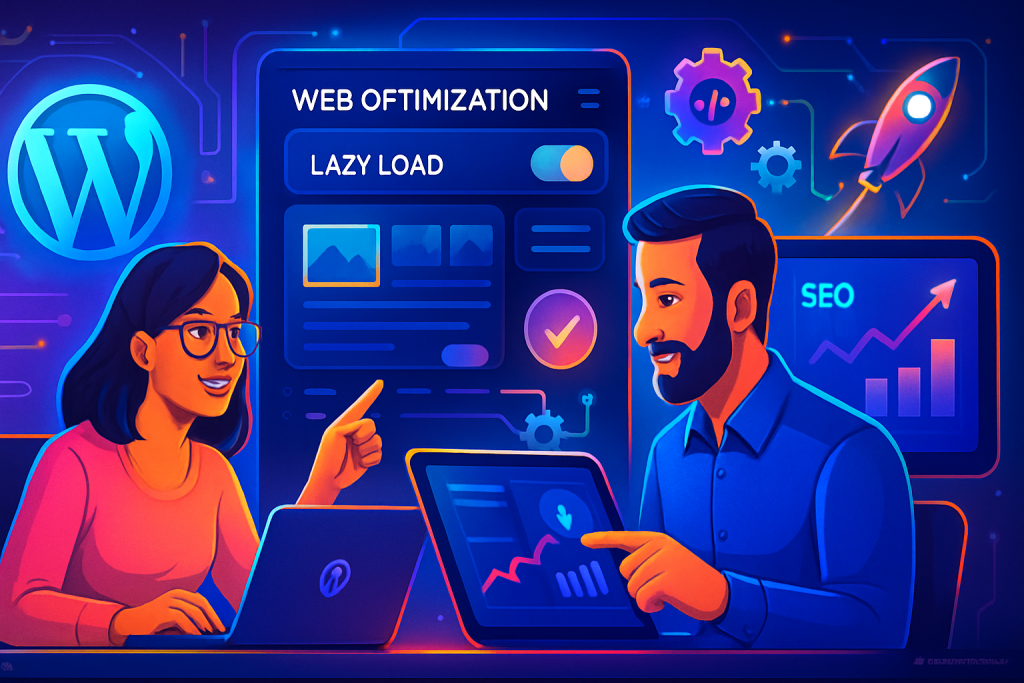
Understanding Lazy Loading
Lazy loading is a performance optimisation technique. It defers the loading of non-essential resources until they are needed. This can significantly enhance your website’s loading speed, which is crucial for retaining visitors and improving SEO rankings.
When a user lands on your site, lazy loading ensures that only the visible content loads immediately. As they scroll down, additional images, videos, or scripts load in the background. This not only speeds up initial loading times but also conserves bandwidth.
Why Lazy Loading Matters
In the digital age, user experience is paramount. A fast-loading website reduces bounce rates and improves engagement. Search engines like Google factor in page speed when ranking websites. Thus, effective lazy loading strategies can have a direct impact on your SEO.
Moreover, a well-implemented lazy loading strategy can improve your website’s Core Web Vitals, which are essential metrics that Google uses to evaluate user experience. These metrics include loading performance, interactivity, and visual stability, all of which can be positively influenced by lazy loading.
Advanced Strategies for Lazy Loading
To effectively use lazy loading without compromising your SEO, consider these advanced strategies:
- Implement Conditional Loading: Ensure that lazy loading is applied selectively, focusing on images and videos below the fold.
- Use Content Delivery Networks (CDNs): CDNs can cache your content, making it load faster and more efficiently.
- Prioritise Critical Content: Load crucial elements first, such as text and key images, to engage visitors immediately.
- Test and Monitor: Regularly test your site’s performance using tools like Google PageSpeed Insights to ensure that lazy loading is working effectively.
- Employ JavaScript Libraries: Use libraries that handle lazy loading for you, ensuring compatibility with various browsers.
Choosing the Right WordPress Plugins
There are numerous plugins available to simplify lazy loading in WordPress. Here are a few reliable options:
1. **Lazy Load by WP Rocket**: This plugin is straightforward to set up and doesn’t impact SEO negatively. It delays the loading of images and iframes, ensuring they only load when they enter the viewport.
2. **a3 Lazy Load**: This plugin is versatile, allowing you to lazy load images, videos, and iframes, and comes with a selection of customisation options.
3. **Smush**: This image optimisation plugin includes a lazy loading feature that helps decrease image loading times without compromising quality.
4. **Lazy Loader**: A simple yet effective option that enables lazy loading for images and iframes without any complex setup.
5. **WP Optimize**: While primarily an optimisation tool, it also includes lazy loading features that help enhance overall site performance.
When choosing plugins, consider their compatibility with your current theme and other plugins, as conflicts can lead to performance issues. Additionally, always read user reviews and check for regular updates to ensure the plugin is well-supported.
Performance and Security Considerations
While implementing lazy loading, keep an eye on performance and security. Ensure that all plugins are regularly updated to avoid vulnerabilities. Test your website’s performance after installations to check for any lag or issues.
You can also enhance security by selecting reputable plugins and monitoring your website for any unusual activity. Regular backups are essential to recover quickly from potential issues. Consider using security plugins that can help detect and mitigate threats, adding an extra layer of protection.
Scalable Website Workflows
As your business grows, your website needs to scale seamlessly. Implementing lazy loading can help manage larger volumes of content without slowing down your site. Here are some tips for maintaining scalable workflows:
– Use cloud hosting services that can handle increased traffic.
– Regularly audit your website to remove unnecessary plugins or themes that can bog down performance.
– Consider using a headless CMS for better control over content delivery and performance.
– Leverage caching mechanisms alongside lazy loading to further enhance speed and efficiency.
Modern WordPress Design Angle
Modern web design emphasises speed, user experience, and mobile responsiveness. Lazy loading fits perfectly into this paradigm by ensuring that users access content smoothly and quickly.
Incorporating lazy loading into your design strategy means prioritising a clean, streamlined layout that doesn’t overwhelm users with information. This also aligns with minimalist design principles, which are currently trending.
Moreover, ensure that your theme is compatible with lazy loading features. Many modern WordPress themes integrate these capabilities directly, which can simplify your workflow. Make sure to choose themes that emphasise performance and are built with optimised loading strategies.
In addition, consider the role of typography and whitespace in modern design. A well-structured layout using appropriate typography can guide users through your content, reducing cognitive overload and enhancing readability. This is especially important when lazy loading is in effect, as users should still find it easy to navigate your site.
Modern design trends also favour interactive elements, such as animations and transitions, which can enhance user engagement. However, be cautious; these should not interfere with lazy loading or overall site performance. Striking a balance between aesthetics and functionality is key.
Final Thoughts
Incorporating advanced lazy loading strategies can significantly improve your WordPress site’s performance without harming your SEO. By selecting the right plugins, focusing on performance and security, and designing with modern principles in mind, you can create a highly efficient website that meets both user and search engine expectations.
Always remember to keep your site updated and regularly monitor its performance. By doing so, you’ll ensure a smooth user experience while staying competitive in your industry. Additionally, consider engaging with your audience through feedback forms to understand their experience better. This can provide valuable insights that help you refine your site’s design and functionality further.
Lastly, as you continue to refine your website, stay informed about emerging trends in web design and development. The digital landscape is ever-evolving, and adapting to new technologies and methodologies will keep your site not only relevant but also ahead of the competition.