WordPress Article
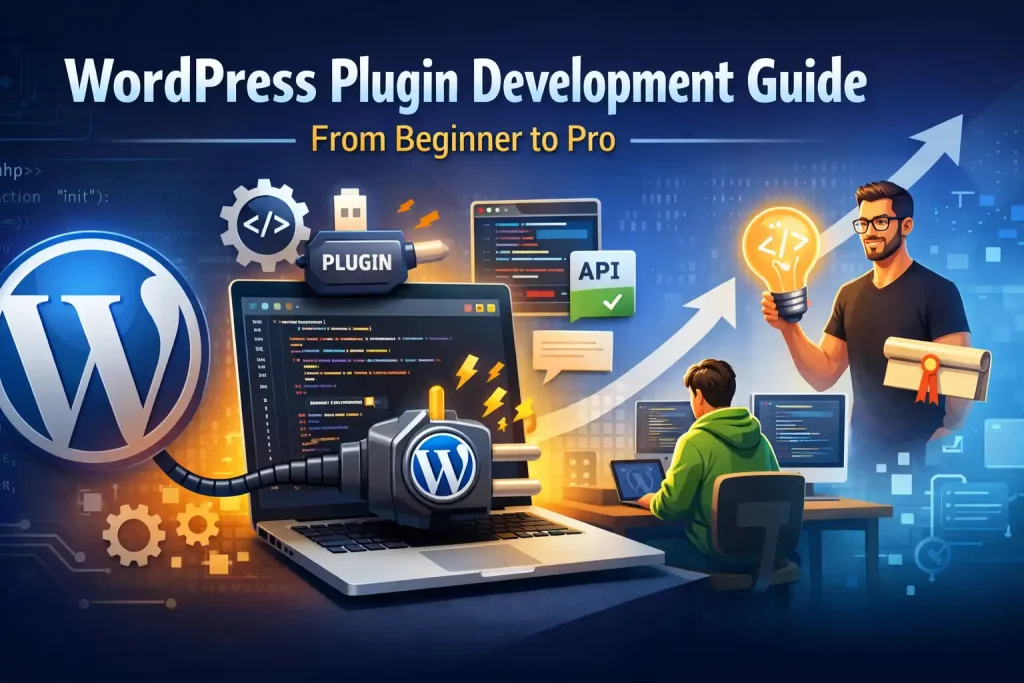
WordPress Plugin Development Guide, From Beginner to Pro
Plugin Development Guide
WordPress Plugin Development Guide: From Beginner to Pro
WordPress plugins are how you turn “I wish my site could…” into a real feature that works every day. You do not need to be a genius to build plugins. You need a steady process, respect for WordPress standards, and a habit of testing what you ship.
WordPress plugin development looks complicated from the outside, but the truth is much simpler. Most good plugins are not built on magic. They are built on repeatable habits: clear scope, stable code, safe input handling, sensible admin screens, and careful testing before anything goes live.
That is why plugin work can suit both beginners and experienced developers. The beginner learns by building small, focused features. The professional stays disciplined and keeps those features maintainable over time. In both cases, the real goal is not just making something work once. The goal is making it work well after updates, under pressure, and on real client sites.
Practical truth: Clients do not buy code. They buy a feature that stays working after updates, does not slow the site, and does not make them nervous to click “Update”.
Pro Checklist
Before you build anything, confirm these three things:
- Outcome: what changes for the user when it is done?
- Scope: what is included and what is not?
- Stability: what must keep working after WordPress updates?
If you can describe the feature in a few sentences, you are ready to build. If you cannot, split it into smaller deliverables.
Start with the right mindset
Beginners often jump straight into writing features. Professionals usually start by writing down the basics first. That is not because they are slower. It is because they are more efficient. A plugin is a promise that says, “This will keep working.” That means the real job is not just adding features. It is building something that stays dependable.
A useful mindset shift is this: build for the next update, not just for today. Before touching any code, define the goal, the users, and what “done” really means. Is this for admins, customers, or staff? What should happen every time, even on a busy day? Those simple questions stop scope creep and prevent projects from becoming vague and messy.
Be clear, not clever
A simple feature that never breaks is more valuable than a complex one that fails when WordPress updates.
Design for real people
Admin users are busy. If the settings page feels confusing, the plugin feels unsafe, even if the code is strong.
Learn the core moving parts
To go from beginner to professional, you do not need to master everything at once. You need comfort with a few core parts, built on good habits. Each small plugin you ship should teach one useful skill. Over time, those skills stack.
Hooks: attach safely, do not fight the system
Data storage: choose the right home for the right data
Admin UI: clean screens build trust
Frontend output: do not break themes
Security basics: safe input, safe output, safe permissions
Build like a professional
Professionals do not just code. They work in steps because steps prevent surprises. Even for a small fix, a stable workflow protects your time and your reputation. The pattern is simple: confirm scope, build a minimal working version, test properly, and deliver versioned.
Professional workflow
- Scope
Confirm what is included, what is not, and what edge cases matter most. - Plan
List screens, data fields, and the exact user flow from start to finish. - Build small
Create a working base first, then add polish and nice-to-haves. - Test
Check admin, frontend, mobile, and one weird edge case real users will hit.
The real professional move is delivery discipline. Keep a short changelog, bump versions properly, and always know how to roll back. If something goes wrong, you do not panic. You revert, fix calmly, and keep trust intact.
When you’re ready for advanced work
The jump to professional work usually happens when you can handle complexity without making the site fragile. Advanced plugin development is not about writing huge code. It is about controlling risk, improving compatibility, and keeping the site fast and dependable.
What advanced work usually includes
- Plugin conflicts: competing scripts, duplicate hooks, overlapping features.
- Large-site performance: efficient queries, caching, pagination, and loading only where needed.
- Integrations: WooCommerce, Stripe, CRMs, email systems, and external APIs.
- Reliability: logging, predictable failures, and clear upgrade paths.
If you can ship features that stay stable after WordPress updates and still feel fast on real websites, you are doing the work properly. That is what separates a casual coder from a plugin developer people hire again.
Keep it simple, keep it shippable
The best plugin is one that still works a year from now. Keep the admin experience clean, ship smaller improvements often, and document what changed. Calm delivery beats heroic last-minute fixes every time.
Over time, your work moves from “I can make it work” to “people trust my work”. That trust is built through repetition: small features, clear scope, stable code, proper testing, and steady delivery.
Next step
Build one small plugin this week. Choose a tiny feature, define done, build the base, test it on mobile, and deliver a versioned update. Repeat that process. Reliability is what clients pay for.